
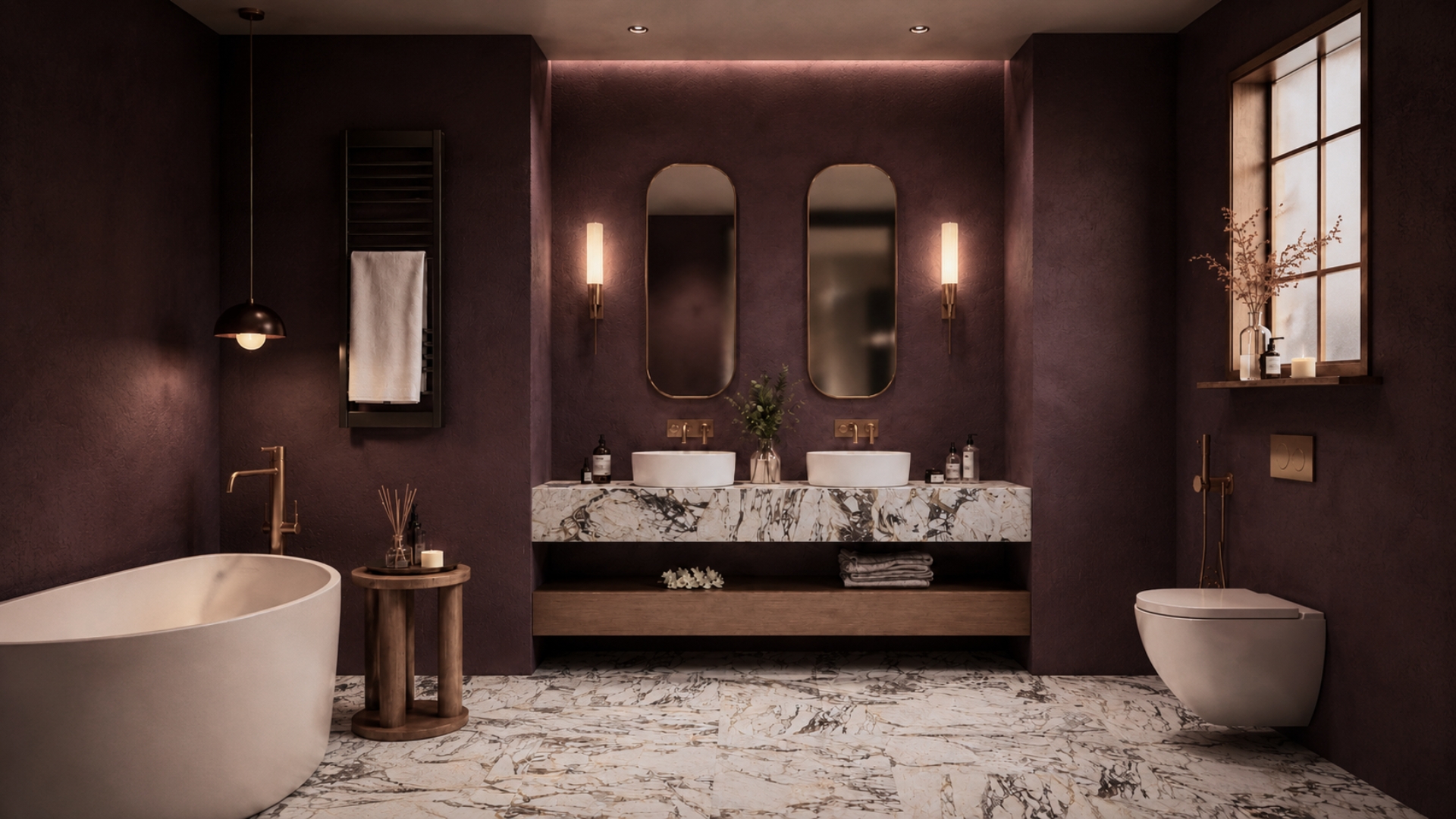
There’s a reason natural stone has been used for centuries in some of the world’s most enduring architecture. It was chosen for beauty, yes, but also for strength, longevity, and the way it becomes more beautiful with time.
Marble is naturally heat-resistant, remarkably durable, and, with proper care, can last a lifetime. And no two pieces will ever be exactly alike. Every vein, shift in color, mineral deposit, and movement was created naturally over time, not printed onto a surface.
That’s the difference. You’re not choosing a pattern.
You’re choosing a piece of the earth.
CONTINUE READING ↓
Not Fragile. Not Temporary.
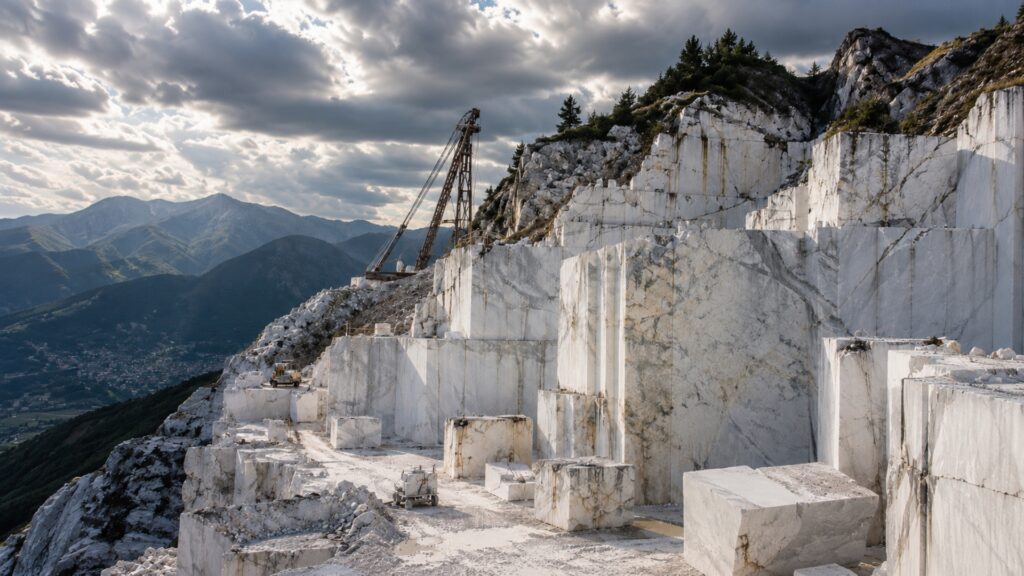
Marble has been used in architecture, sculpture, and interiors for centuries for a reason. It isn’t just a beautiful stone, it’s a material made to endure.
With proper sealing and care, marble can last for decades, even generations. It naturally handles heat, everyday use, and the demands of real spaces far better than its “high-maintenance” reputation suggests.
And unlike many manufactured surfaces, natural stone doesn’t have to be discarded the moment it shows its age. Marble can be honed, refinished, restored, and given new life.
That’s why we don’t view patina, movement, or the occasional mark as a failure of the material.
Natural stone is meant to live with you…and outlast trends while doing it.
Variation Brings Life.
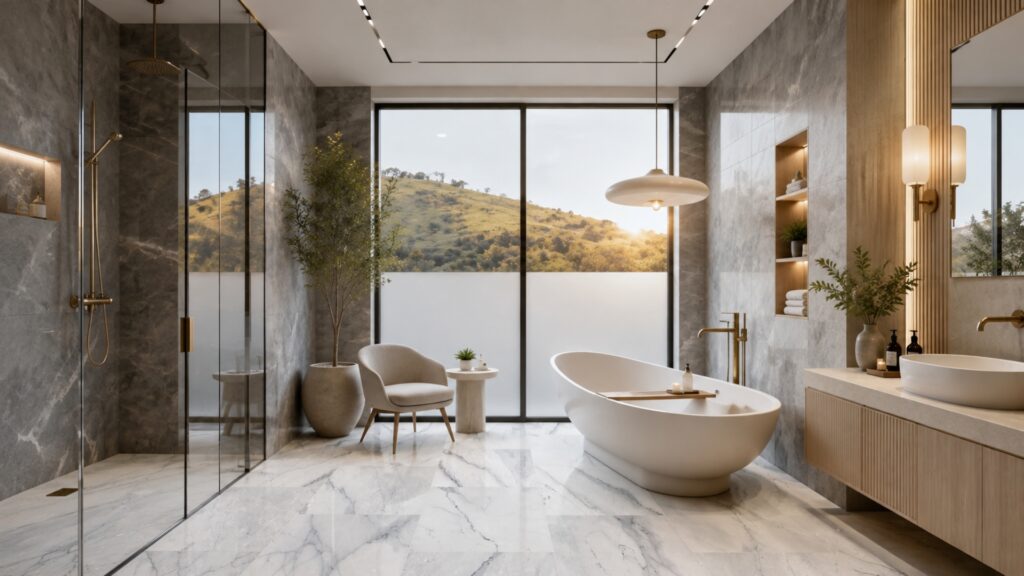
Natural variation gives a space something manufactured surfaces often struggle to recreate: visual depth and movement.
A soft shift from pearl white to gray can add variation and life to your bathroom floors. Dramatic burgundy veining can turn a small marble wall into a conversation-starter. Subtle mineral deposits in natural stone can introduce gorgeous hints of gold, gray, blue, or green.
When these individual pieces are installed together with proper dry-laying, the variation allows the material to come alive in your space.
The result is a surface that feels collected and lived in, rather than manufactured.
The Beauty Is in the Mix.
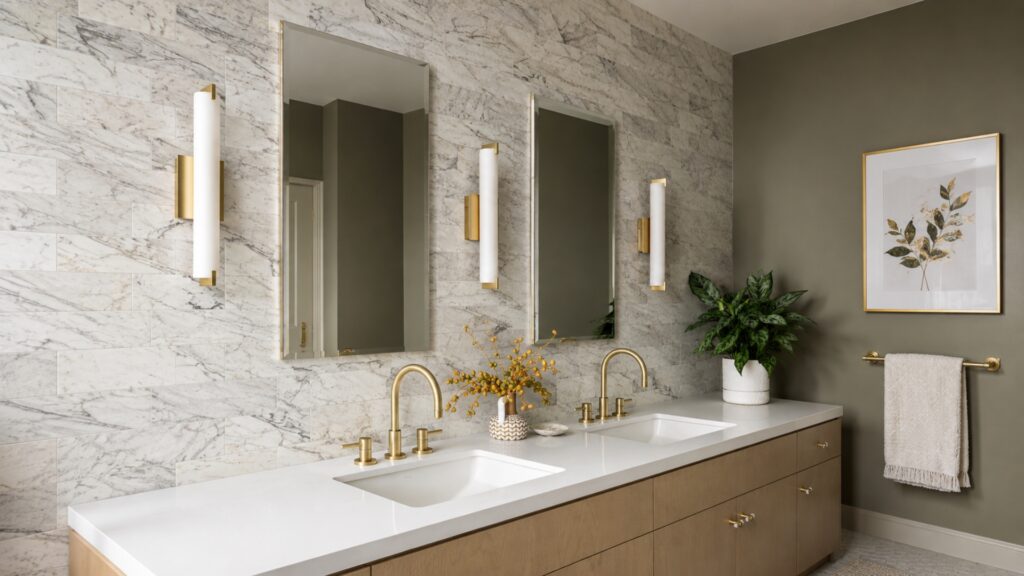
When choosing natural stone, it is important to look beyond a single sample.
One tile can introduce you to the material, but it cannot tell the entire story.
Because natural stone varies from piece to piece, the finished installation should be viewed as a composition rather than a collection of identical tiles. Some pieces may be lighter. Others may contain stronger veining or more movement. Together, those differences create the character of the stone.
This is also why professional blending during installation is so important. Laying out material from several boxes before installation allows the natural tones and markings to be distributed intentionally throughout the space.
The goal isn’t to eliminate variation. The goal is to celebrate it.
Variation is what makes it special.
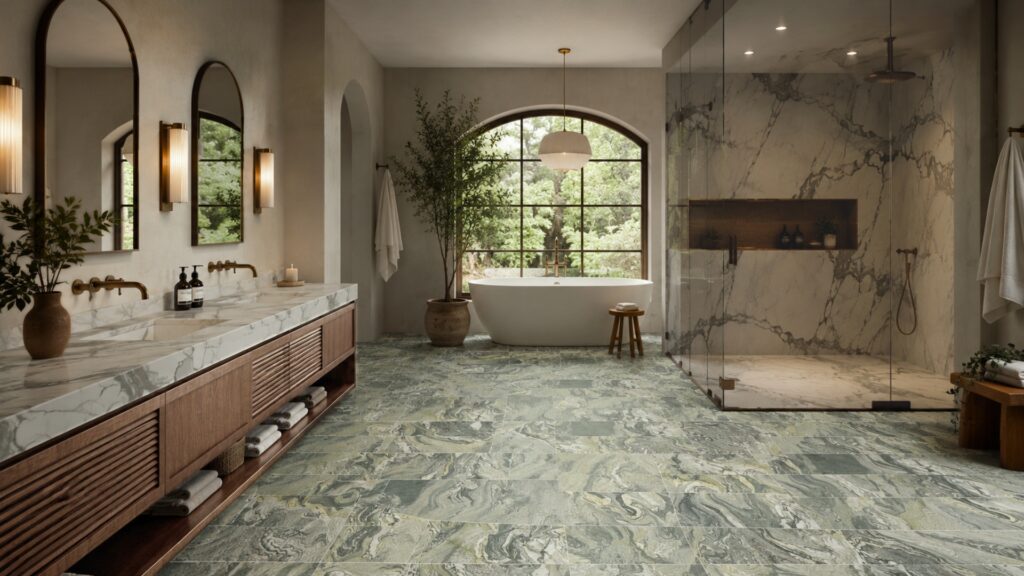
What sets natural stone apart is that it was never designed to be predictable.
It changes from piece to piece, project to project, and space to space. That variation is what gives it presence—and what allows every installation to feel completely its own.
When selected thoughtfully, blended intentionally, and allowed to be exactly what it is, natural stone becomes more than a surface. It becomes part of the character of the space.